On the Latin language
by Varro, Marcus Terentius; Kent, Roland G. (Roland Grubb), 1877-1952
Publication date 1938
Topics Latin language
Publisher London : W. Heinemann
Collection pratt; toronto
Digitizing sponsor Andrew W. Mellon Foundation
Contributor Pratt - University of Toronto
Language English; Latin
M. Terenzio Varrone libri intorno alla lingua latina
by Varro, Marcus Terentius; Canal, Pietro, 1807-1883; Brunetti, Frederico
Publication date 1874
Publisher Venetiis : Excudit Joseph Antonelli ; Venezia : Tipografia di Giuseppe Antonelli
Collection university_of_illinois_urbana-champaign; americana
Digitizing sponsor University of Illinois Urbana-Champaign
Contributor University of Illinois Urbana-Champaign
Language Latin; Italian
Thursday, January 2, 2020
Wednesday, January 1, 2020
La centuriazione romana (pubblicazioni di AC Sparavigna)
La Limitatio Romana: Alcune Definizioni (2020) - Sparavigna, Amelia Carolina - Prima parte di una discussione sulla tecnica di agrimensura romana, detta limitatio o anche centuriazione. Si forniscono alcune definizioni. L'uso della groma, uno degli strumenti usati dagli agrimensori, sarà analizzato in dettaglio La discussione ha lo scopo di preparare ad una ulteriore discussione sull'orientamento della limitatio.
Si propone un sunto di alcune definizioni relative alla tecnica degli agrimensori romani. Compreso l'uso della groma.
_______
La centuriazione è ancora visibile nelle immagini satellitari.
Sparavigna, Amelia Carolina, Roman Centuriation in Satellite Images (December 26, 2015). PHILICA Article number 547, Available at SSRN: https://ssrn.com/abstract=2742223 Abstract: The satellite images of Google Earth can show us how the Roman divided the land in their colonies, according to the surveying system of Centuriation.

Ho provato a vedere se ci sono orientazioni astronomiche nelle centuriazioni della Tunisia.
Astronomical Orientations in the Roman Centuriation of Tunisia - Amelia Carolina Sparavigna - Abstract : The centuriation, also known as limitation, was the method used by the Roman surveyors for subdividing the land in a regular chessboard of fields, created by a grid made of parallel and perpendicular roads and canals. Here we discuss the limitation of Tunisia and the existence of some astronomical orientations of the grids, that is, orientations towards the direction of the sunrise on solstices or moonrise on lunar standstills.
Ci sono diversi lavori sulla centuriazione della Tunisia che dicono che esiste una orientazione solare, ossia rispetto al sorgere del sole, ma ci sono anche dei lavori che dicono che la centuriazione sia fatta rispetto al luogo scelto, come del resto detto dagli stessi agrimensori romani. E quindi è sempre necessario verificare con cura i dati. Per esempio, una centuriazione in Tunisia, che si dice essere orientata verso il sorgere del sole al solstizio d'estate, è impossibile ed invece sembra esserci una orientazione verso un lunistizio settentrionale maggiore.
Quindi, quando si sente parlare di orientazione solare delle centuriazione, attenzione, è una possibilità. Una possibilità, non una regola. Qualcuno la spaccia come regola inviolabile etrusca. Non è vero!
_______
Vi invito a leggere:
What the Latin literature truly tells us about the orientation of camps, towns and centuriation (2020). Sparavigna, Amelia Carolina - "Here we are proposing a presentation and translation of some parts of the work by J. Le Gall on the solar orientation of the Roman camps, towns and centuriation. Le Gall is giving us a detailed description of the Latin literature regarding this orientation. The article, that was published in 1975 in the Mélanges de l'école française de Rome is therefore a fundamental reading so as not to get biased by any suggestion about solar orientation, that we can find in modern literature."
Il fondamentale articolo in Francese di Le Gall è disponibile liberamente in rete.
_______


Storia della Scienza nel Mondo Antico (pubblicazioni di AC Sparavigna)
A.C. Sparavigna (2011) Water, air and fire at work in Hero's machines. In: ARCHAEOGATE n. 24-01-2011. - ISSN 1973-2953 - anche reperibile in https://arxiv.org/abs/1101.3470 Abstract: Known as the Michanikos, Hero of Alexandria is considered the inventor of the world's first steam engine and of many other sophisticated devices. Here we discuss three of them as described in his book "Pneumatica". These machines, working with water, air and fire, are clear examples of the deep knowledge of fluid dynamics reached by the Hellenistic scientists.
E' un articolo sulle Macchine di Erone. Il mio lavoro è stato oggetto di un articolo su MIT Technology Review, "The Amazing Steam Engines Of The First Century - An online translation of an ancient text reveals some engineering marvels from antiquity." by Emerging Technology from the arXiv archive page. January 20, 2011
_____
A.C. Sparavigna (2011). Ancient concrete works. arXiv:1110.5230 Abstract: It is commonly believed that the ancient Romans were the first to create and use concrete. This is not true, as we can easily learn from the Latin literature itself. For sure, Romans were able to prepare high-quality hydraulic cements, comparable with the modern Portland cements. In this paper, we will see that the use of concrete is quite older, ranging back to the Homeric times. For instance, it was used for the floors of some courts and galleries of the Mycenaean palace at Tiryns.
Già il palazzo miceneo di Tirinto aveva i pavimenti in cemento. Come era fatto questo cemento? ... E' una storia interessante quella relativa alla scoperta di questo cemento, Leggendo il mio testo potete trovare che c'è di mezzo Schliemann e alla sua ricerca di tesori nascosti. Nel 1876, Heinrich Schliemann, considerando il palazzo di Tirinto come poco rilevante per lui - lo riteneva medievale - si mise d'impegno, e quasi lo distrusse, cercando di andare sempre più in basso alla ricerca di tesori, e così bucava i pavimenti di cemento.
Articolo citato come fonte dalla BBC - per la serie "50 Things that made the Modern Economy". Video sul cemento.
_____
A.C. Sparavigna (2014) Some Notes on Ancient Concrete, International Journal of Sciences 02(2014):1-6 DOI: 10.18483/ijSci.412 Abstract: Concrete is a material composed of coarse granular particles embedded in a binder that glues the particles together. It is commonly believed that the ancient Romans were the first to create and use such material, but this is not true, as we can easily learn from the Latin literature itself. Without any doubt, Romans were able to prepare high-quality hydraulic cement, comparable with the modern Portland cement. In this paper we present some notes on the ancient concrete. From Rome, we will go back in time, showing how the Greeks used it in their Mycenaean royal palaces. The paper continues talking about an Egyptian concrete and ends discussing the use of concrete during Neolithic times.
Il cemento non è invenzione moderna e neppure dei Romani. I Romani hanno inventato il cemento idraulico.
______
A.C. Sparavigna (2011), Materials Science in Ancient Rome, ARCHAEOGATE, July 23, 2011. Abstract: Two books, the "De Architectura" by Vitruvius and the "Naturalis Historia" by Pliny the Elder, give us a portrait of the Materials Science, that is, the knowledge of materials, in Rome at the beginning of the Empire. Here, I am reporting some very attractive contents that we can find in these books. The reader will see the discussion proposed in fours case studies: concretes, coatings, amorphous materials and colloidal crystals, to describe them in modern words.
Cemento, mercurio, vetro, cristalli fotonici (eccome!).
Available at SSRN: https://ssrn.com/abstract=2747880
______
A.C. Sparavigna (2012) Faience: the ceramic technology of ancient Egypt. In: ARCHAEOGATE n. 12-Febbraio-2012. - ISSN 1973-2953 Abstract: The term “faience” is commonly referred to a glazed earthenware, the use of which spread in Europe during the Renaissance from France and Italy. The term was derived from Faenza, the town in Italy, where the glazed earthenware was mainly produced. The other name often used for this earthenware is “majolica”. Majolica itself had a long tradition in the North African and Near East Islamic production of ceramic. In the 19th century, European archaeologists used the misleading name of “Egyptian faience” to designate the siliceous ceramics produced in the ancient Egypt. The ancient faience was a completely different material created to imitate the gloss and colour of gems and precious stones. This material started to be used in jewellery in Egypt and the Near East, about the fourth millennium BC, that is, during the predynastic age."
A.C. Sparavigna (2014). Ancient Technologies: The Egyptian Sintered-Quartz Ceramics. PHILICA Article number 426. 14 Settembre Mar 2014 - Available at SSRN: https://ssrn.com/abstract=2742291 Abstract: To physicists and engineers, ceramics represent materials demonstrating excellent strength and hardness, materials that can serve as electrical insulators or conductors, some of them being able of a high-temperature superconductivity. To researchers working in archaeology and art history, ceramics mean objects such as figurines, tiles and tableware helping understanding cultures and technologies of the past. They are among the most common artifacts to be found in archaeological sites, because made of an imperishable material. Then, ceramics are for interdisciplinary studies the subjects by excellence. Here we will discuss the Egyptian faience, a ceramic based on sintered-quartz materials, an old high-tech material that allows creating objects which have glossy surfaces with lustre of various blue-green colours. This paper shows how faience had been produced and discusses some methods used for its analysis.
Visto che si è parlato di vetro e cemento, si deve anche parlare della faience egizia!
______
A.C. Sparavigna (2011) Chersiphron & Son Engineers. In: ARCHAEOGATE n. 02-12-2011. - ISSN 1973-2953 - Abstract: An ancient engineering firm worked successfully in the construction of one of the Seven Wonders of the Ancient World. The engineers used inclined planes, bags of sand and shafts of columns and architraves as wheels and axels. Preorint in https://arxiv.org/abs/1110.5849
Anche il mondo antico aveva i sui studi di ingegneria.
_______
Condicio sine qua non
"Per quanto riguarda la presenza di una dimensione «politica» nell’opera dello Studioso, voglio accennare, infine, alle preoccupazioni da lui espresse circa uno dei fondamenti del nostro lavoro: la conoscenza delle due lingue classiche. Il venir meno di tale condicio sine qua non – intravisto dal Collega fin dagli Anni Settanta nella recensione di un volume francese (ma il fenomeno coinvolge da tempo anche la storiografia di àmbito anglosassone) – riguarda oggi pure la formazione antichistica impartita nell’Università italiana. Sulla gravità di questo fenomeno la comunione di giudizio con Filippo Càssola era completa, e mi piace notarlo. Rimane aperta la questione se nello sfascio istituzionale e culturale del nostro Paese un’inversione di tendenza sia possibile."
da "Leandro Polverini e la storiografia moderna sul mondo antico", di Gino Bandelli
Penso che il riferimento sia al fatto che non si leggono più le opere antiche in Latino o in Greco.
Penso.
Penso che il riferimento sia al fatto che non si leggono più le opere antiche in Latino o in Greco.
Penso.
Il mito di Roma
Il mito di Roma: Da Carlo Magno a Mussolini
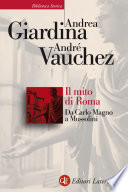 André Vauchez, Andrea Giardina, Gius.Laterza & Figli Spa - History - 348 pages
Non solo una città, ma nucleo generatore di miti, luogo che fin dall'antichità ha offerto metafore e modelli alle lotte politiche, ai conflitti religiosi, alle scelte culturali. Dal Medioevo a oggi, Giardina e Vauchez raccontano la presenza del mito di Roma all'origine delle idee politiche che ancora animano l'attualità. La concezione universalistica dell'impero medievale e del papato, la difesa delle libertà cittadine e dei valori dell'autogoverno, l'immagine trionfante della Rivoluzione francese e la vocazione scenografica del fascismo sono le principali tributarie del mito di Roma, così come lo sono stati tutti quei movimenti che, dalla Riforma protestante ai nazionalismi ottocenteschi e al nazismo, si sono riconosciuti in un'identità 'antiromana'. Fra riabilitazioni e cadute, fra entusiastiche adesioni e drastici rifiuti, il mito di Roma continua a vivere un destino alterno, nelle cui pieghe corre la strada maestra della nostra storia
Non solo una città, ma nucleo generatore di miti, luogo che fin dall'antichità ha offerto metafore e modelli alle lotte politiche, ai conflitti religiosi, alle scelte culturali. Dal Medioevo a oggi, Giardina e Vauchez raccontano la presenza del mito di Roma all'origine delle idee politiche che ancora animano l'attualità. La concezione universalistica dell'impero medievale e del papato, la difesa delle libertà cittadine e dei valori dell'autogoverno, l'immagine trionfante della Rivoluzione francese e la vocazione scenografica del fascismo sono le principali tributarie del mito di Roma, così come lo sono stati tutti quei movimenti che, dalla Riforma protestante ai nazionalismi ottocenteschi e al nazismo, si sono riconosciuti in un'identità 'antiromana'. Fra riabilitazioni e cadute, fra entusiastiche adesioni e drastici rifiuti, il mito di Roma continua a vivere un destino alterno, nelle cui pieghe corre la strada maestra della nostra storia
Sunday, December 29, 2019
Confucio
Un uomo che ha commesso un errore e non lo corregge sta commettendo un altro errore. (Confucio)
Thursday, December 26, 2019
The seeds of Time
If you can look into the seeds of time, and say which grain will grow and which will not, speak then unto me.
Lord Banquo (William Shakespeare)
Lord Banquo (William Shakespeare)
Tuesday, December 24, 2019
Augusto in camicia nera
" Egli infatti sembra recepire le novità rappresentate dai lavori del Kornemann, con la caratterizzazione del principato augusteo come il primo Führerstaat; e pare inoltre avere ben presente il Princeps di Wilhelm Weber, con l’interpretazione weberiana delle Res Gestae come ͑ιερòς λόγος del princeps – e di Augusto come σωτήρ instauratore di un nuovo ordine cosmico".
Da un articolo la cui lettura fortemente consiglio. E ancora:
9 maggio 1936, h. 22:30. Dal fatidico balcone di Palazzo Venezia Mussolini annuncia alla folla, nella retorica dell’epoca ovviamente sempre «oceanica e plaudente», «… la riapparizione dell’impero sui colli fatali di Roma» – con clausola finale esametrica, epica! L’Impero, dopo quindici secoli! Gli officianti del regime non potevano lasciarsi sfuggire l’occasione. Vi si avventurarono specialisti e dilettanti. L’opera era gradita. Serviva, alla legittimazione del nuovo impero – ed a giustificazione del risorgente imperialismo – il richiamo a Roma, all’impero di Augusto, alla pax romana, alla missione civilizzatrice della Città Eterna. Il regime apprezzava i suoi corifei."
Augusto in camicia nera. Storiografia e ideologia nell’era fascista, di Mario Mazza. Università La Sapienza Roma
Abstract: Il presente contributo si propone di analizzare gli interventi storiografici prodotti in Italia per il bimillenario della nascita di Augusto. Particolare attenzione è rivolta a tre nuclei tematici: Augusto come rivoluzionario, instauratore del novus status rei publicae; Augusto capo carismatico, Führer - Dux; l’esaltazione dell’impero augusteo.
Abstract: Il presente contributo si propone di analizzare gli interventi storiografici prodotti in Italia per il bimillenario della nascita di Augusto. Particolare attenzione è rivolta a tre nuclei tematici: Augusto come rivoluzionario, instauratore del novus status rei publicae; Augusto capo carismatico, Führer - Dux; l’esaltazione dell’impero augusteo.
Monday, December 23, 2019
Il trasporto di frammenti dell'Ara Pacis a Roma per volere del Duce in o...
La Mostra Augustea della Romanità fu uno dei numerosi eventi organizzati in Italia durante il fascismo in occasione del Bimillenario Augusteo. Fino a tal mostra, alcuni dei pannelli dell'Ara Pacis erano al Museo degli Uffizi a Firenze. Altri pezzi erano sparsi in Italia e nel mondo.
Da https://it.wikipedia.org/wiki/Ara_Pacis
"Tra il 1918 e il 1921 si iniziò a prendere in considerazione la proposta fatta dal professor Oreste Mattirolo, presidente della Società Piemontese di Archeologia e Belle Arti, di riunire i frammenti ritrovati fino ad allora e sparsi in varie parti d'Italia e del mondo. Alla vigilia del ventennio fascista e del dominio italiano del Duce, l'idea di ricostruire il monumento edificato dal primo "vero" duce Augusto eccitò l'opinione pubblica, e si arrivò anche a ipotizzare le iscrizioni da riportare sul monumento restaurato, come “ARA PACIS OLIM AUGUSTAE NUNC TOTIUS ITALIAE A.D. MCMXIX” oppure “GERMANIA VICTA AUSTRIA DELETA COSTANTINOPOLI ET HIEROSOLYMA LIBERATIS ARA PACIS AUGUSTAE RESTITUTA ANNO MCMXIX”[9][6]."
/http://www.instoria.it/home/mito_augusto_ventennio_fascista.htm
N. 56 - Agosto 2012 (LXXXVII). BIMILLENARIO AUGUSTEO, IL MITO DI AUGUSTO NEL VENTENNIO FASCISTA, di Sonia Favale
"Il princeps fu stimato e smitizzato a seconda del contesto storico o delle diverse correnti di pensiero politico. Alcuni lo vedevano come il monarca buono e clemente, accostandolo ai propri sovrani con il fine di adularli, invece, altri come Voltaire e Montesquie intravedevano in lui un mostro e un tiranno assetato di sangue. Conservatore per alcuni, rivoluzionario per altri!
Fu il regime fascista, però, che fece di lui un mito! ... Il 1937 coincideva proprio con il bimillenario augusteo! Nel regime si iniziò a parlare di mistica millenaria."Desidero riportare un altro pezzo dell'articolo.
"Nello stesso periodo storico, nel 1939, uno studioso britannico Ronald Syme, mostrandosi scettico riguardo ai festeggiamenti per il bimillenario augusteo, si apprestò al affiancare le figure di Mussolini a quella di Augusto. In particolare ciò che veniva posto sullo stesso piano erano i due golpe di stato. Syme accostava la vecchia e nuova marcia su Roma. La prima era stata quella del giovane Gaio Giulio Cesare Ottaviano nel 43 a.c. mentre la seconda era stata quella di Mussolini nel 1922. Entrambi avevano indirizzato la rispettiva marcia su Roma, cuore dello stato, in quanto nel 43 sede del senato romano e nel 1922 del parlamento italiano e della monarchia. Syme, con molta più lucidità e distacco, dagli eventi italiani taccia di panegirismo tutti coloro che avevano tessuto elogi per un uomo scaltro e manipolatore come Augusto, che era stato bravo nel creare un potere personale attraverso guerre civili."
L'inaugurazione delle statue di Cesare ed Augusto, dono di Mussolini all...
Giornale Luce B0754 del 24/09/1935
Un po' di storia sulla piazza Cesare Augusto, quella della Porta Palatina e le due statue di Cesare e Augusto. Oggi, la statua di Augusto, appare talvolta nei filmati che mostrano la città. Diciamolo però chiaramente: le statue non sono originali. Qualcuno, vedendole magari in televisione davanti alla porta romana della città può pensarle vecchie di duemila anni. No. Sono dono di Mussolini alla città Sabauda, come spiega il filmato Luce.
Da quanto mi risulta, non ci sono statue di Augusto e Cesare ritrovate a Torino. La testa di Cesare, quella di Tuscolo, che oggi è al museo archeologico di Torino, viene appunto dalla città laziale e non dal Piemonte.

Per maggiori dettagli si veda
https://www.beniculturalionline.it/location-166_-Porta-Palatina.php
oppure http://archive.is/k1tuA
"Riportata al suo aspetto attuale, la Porta Palatina fu nuovamente oggetto di restauro dal 1934 al 1938, su iniziativa del governo fascista. Vennero dunque aperti tutti i fornici e fu isolata la struttura dal contesto urbano circostante, abbattendo un gruppo di vecchie case troppo a ridosso del monumento.
Tuttavia, alcuni di questi interventi furono considerati erronei dagli archeologi, poiché la porta in origine era a ridosso dell'abitato circostante ma, soprattutto, venne contestata l'errata collocazione della coppia di statue bronzee.
Esse, infatti, sono poste erroneamente nell'area interna occupata originariamente dalla statio e non in quella esterna, dove avrebbero trovato una collocazione più credibile."
Da Politecnico di Torino Dipartimento Casa-Città, Beni culturali ambientali nel Comune di Torino, Società degli Ingegneri e degli Architetti in Torino, Torino 1984:
PORTA PALATINA Piazza Cesare Augusto
Porta del lato settentrionale della cinta urbana di età romana.
Monumento di valore storico-artistico e documentario, con relativa area di pertinenza costituente integrazione storico- ambientale; esempio singolare anche per l'eccezionale stato di conservazione di porta urbana del I secolo a.C. - I secolo d.C.
Porta urbana aperta sul lato settentrionale, allo sbocco del cardo maximus, da cui partiva la strada per Roma, edificata contemporaneamente (età augustea) o negli anni immediatamente successiva (età flavia) alla creazione della cinta delle mura. Inglobata in strutture edilizie posteriori, fu conservata per intervento dell'ing. Antonio Bertola che ne impedì la demolizione all'inizio del XVIII secolo. Solo nella seconda metà dell'Ottocento iniziò la rivalutazione storica e scientifica con massicci interventi di restauro. Nel 1861 il Comune delibera l'isolamento della Porta Palatina e il restauro, durato fino al 1873, viene affidato a C. Promis. Vengono demoliti tutti gli edifici addossati alla porta e conservati (solo per l'autorevole intervento del Promis) i tratti delle mura adiacenti alle torri. Nel 1904 riprendono alcuni lavori di restauro sotto la direzione di A. D'Andrade, con lo scoprimento della base della torre orientale e il ritrovamento dei muri del cavaedium. I lavori interrotti per la guerra vengono ripresi nel 1932. Ultimi sondaggi e restauri nel 1937-38, con l'individuazione di strutture che fanno supporre l'esistenza di una porta precedente di età repubblicana.
Tavola: 41

Thursday, December 19, 2019
Varro's Roman Seasons
Varro's Roman Seasons
The four seasons of the Roman calendar, as described by Marcus Terentius Varro, are different from our seasons, in the sense that they start on days which differ from those that we are using today. In his Books on Agriculture, Varro shows that the Roman seasons started on the Cross Quarter-days instead than on the Quarter-days of the year as it happens today. Besides the classic subdivision in four parts, in the Books on Agriculture we can also find the year divided into eight parts, that is eight seasons having quite different lengths. In our discussion of Varro's seasons we will compare the days he mentions for the separation of seasons to the Cross Quarter- and Quarter-days that we find in Celtic calendars.
Available also at https://hal.archives-ouvertes.fr/hal-02387848
The four seasons of the Roman calendar, as described by Marcus Terentius Varro, are different from our seasons, in the sense that they start on days which differ from those that we are using today. In his Books on Agriculture, Varro shows that the Roman seasons started on the Cross Quarter-days instead than on the Quarter-days of the year as it happens today. Besides the classic subdivision in four parts, in the Books on Agriculture we can also find the year divided into eight parts, that is eight seasons having quite different lengths. In our discussion of Varro's seasons we will compare the days he mentions for the separation of seasons to the Cross Quarter- and Quarter-days that we find in Celtic calendars.
Available also at https://hal.archives-ouvertes.fr/hal-02387848
Tuesday, December 17, 2019
Santa Maria di Vezzolano
Il Medioevo in Piemonte - Santa Maria di Vezzolano (AT)
A cura di Luca De Chiara - 31 Dicembre 2014
"Lo scorso novembre ci siamo recati in visita, ... al complesso abbaziale di Santa Maria di Vezzolano, nei pressi di Albugnano (AT), magnifico archetipo di romanico lombardo-piemontese. Non si è trattato della "gita canonica", ma si è voluta sperimentare una sorta di indagine conoscitiva, proponendo agli studenti un sopralluogo del sito con raccolta dati guidata, attraverso appunti, fotografie e disegni."

A cura di Luca De Chiara - 31 Dicembre 2014
"Lo scorso novembre ci siamo recati in visita, ... al complesso abbaziale di Santa Maria di Vezzolano, nei pressi di Albugnano (AT), magnifico archetipo di romanico lombardo-piemontese. Non si è trattato della "gita canonica", ma si è voluta sperimentare una sorta di indagine conoscitiva, proponendo agli studenti un sopralluogo del sito con raccolta dati guidata, attraverso appunti, fotografie e disegni."

La discussione proposta dal Prof. De Chiara è estremamente interessante.
Vi rimando anche alla mia discussione archeoastronomica
Friday, November 29, 2019
Pietro ad Amburgo
Pietro è stato portato da Danzica in un campo di concentramento vicino ad Amburgo.
La mattina si doveva lasciare la baracca per il lavoro. Già dai primi giorni a Pietro è chiaro che chi non sta bene e non va a lavorare, la sera in baracca non c'è più. E quindi organizza. Ci si aiuta, si trascina chi è sfinito al lavoro, perché non lavorare significa morte.
Pietro Dastrù, Caporal Maggiore, Cuneense, Campagne di Albania e di Russia
La mattina si doveva lasciare la baracca per il lavoro. Già dai primi giorni a Pietro è chiaro che chi non sta bene e non va a lavorare, la sera in baracca non c'è più. E quindi organizza. Ci si aiuta, si trascina chi è sfinito al lavoro, perché non lavorare significa morte.
Pietro Dastrù, Caporal Maggiore, Cuneense, Campagne di Albania e di Russia
Lidia e il grembiulino blu a cuoricini rossi
1944. La mattina la mamma aveva comprato al mercato a Sanfront una bella stoffa blu a cuoricini rossi per fare il grembiulino di scuola a Lidia. Il pomeriggio Mafalda lo aveva tagliato e cucito.
Il giorno dopo Lidia arriva a scuola col suo bel grembiulino nuovo e la maestra le dice "A scuola si viene col grembiule nero". Tornata casa, la mamma dice a Lidia "Domani dì alla maestra questo: per i grembiuli e le camice nere, mia mamma ha due figli dispersi in Russia e uno in campo di concentramento in Germania" .
Il giorno dopo Lidia arriva a scuola con grembiulino blu a cuoricini rossi, e la maestra la guarda, ma prima che possa dire qualcosa, Lidia dice "Per i grembiuli e le camice nere mia mamma ha due figli in Russia e uno in Germania". La maestra non ha mai più detto nulla.
I fratelli di Lidia, Remo e Giovanni, non sono tornati dalla Russia e Pietro è tornato dopo cinque anni dalla Germania. Da lui ho imparato le prime parole di Tedesco.
Giovanni Dastrù, Caporal Maggiore, Cuneense, Campagna di Russia
Remo Dastrù, Caporal Maggiore, Julia, Campagne di Albania e Russia
Pietro Dastrù, Caporal Maggiore, Cuneense, Campagne di Albania e Russia
I fratelli di Lidia, Remo e Giovanni, non sono tornati dalla Russia e Pietro è tornato dopo cinque anni dalla Germania. Da lui ho imparato le prime parole di Tedesco.
Giovanni Dastrù, Caporal Maggiore, Cuneense, Campagna di Russia
Remo Dastrù, Caporal Maggiore, Julia, Campagne di Albania e Russia
Pietro Dastrù, Caporal Maggiore, Cuneense, Campagne di Albania e Russia